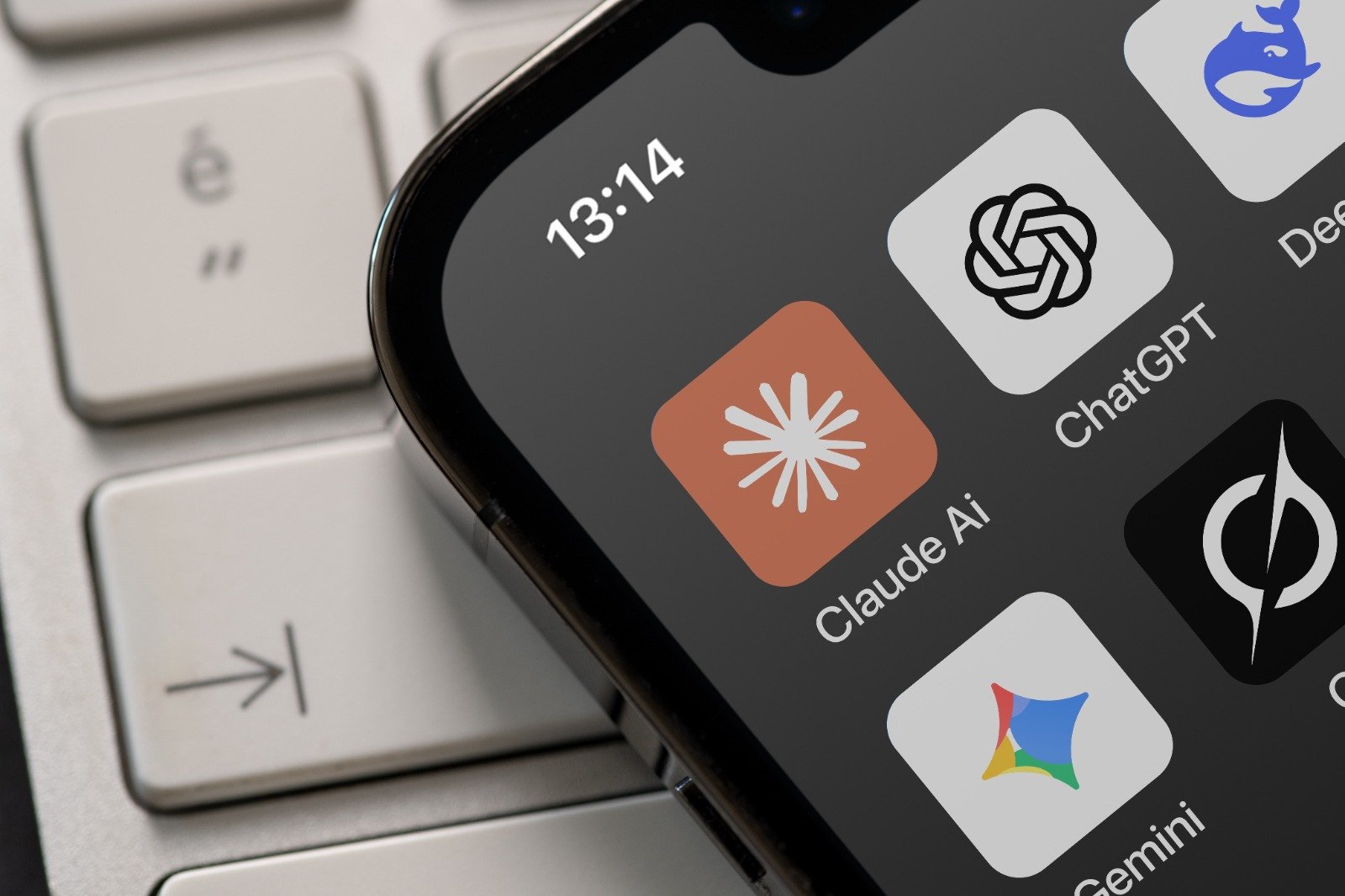
The artificial intelligence industry has expanded rapidly over the past few years, transforming from an experimental field into a core part of the digital economy. For much of this period, conversational AI has been closely associated with one platform: ChatGPT. Since its public launch, ChatGPT introduced millions of users to AI-driven conversation, helping define how people interact with intelligent systems.
However, technology markets rarely remain dominated by a single platform for long. As the industry grows, competitors inevitably emerge with alternative approaches and new capabilities. The recent surge in popularity of Claude, developed by Anthropic, represents one of the clearest signs that the AI assistant landscape is entering a more competitive phase.
The moment Claude overtakes ChatGPT in certain app store rankings or user adoption metrics reflects more than a temporary shift. It highlights a broader transformation in how AI platforms compete, evolve, and integrate into business workflows.
The Rise of Competition in Conversational AI

ChatGPT initially gained massive adoption because it demonstrated the practical power of large language models to a global audience. People quickly began using the system for a wide range of tasks, including writing, research, coding assistance, brainstorming ideas, and explaining complex concepts.
For many users, ChatGPT effectively defined the entire category of conversational AI. Students used it as a study assistant, developers used it to accelerate coding tasks, and businesses experimented with integrating it into customer support and content workflows.
However, once a technology category proves valuable, it attracts investment and competition. Other companies begin developing alternatives that address perceived limitations or introduce new capabilities. This pattern has repeated across nearly every major technology sector, from web browsers to mobile operating systems.
Anthropic entered the AI assistant market with Claude, a model designed with strong reasoning capabilities and a focus on safety and reliability. As more users began exploring the platform, adoption increased quickly, eventually pushing the system into direct competition with ChatGPT for user attention.
Why This Shift Matters for Businesses
The growing competition between AI assistants has significant implications for businesses. Artificial intelligence is no longer a niche research tool; it has become an operational asset across many industries.
Marketing teams now rely on AI to generate campaign ideas, draft content, and analyze audience insights. Sales teams use AI-powered systems to identify potential customers and personalize communication. Customer service departments deploy AI chatbots to handle routine inquiries and improve response times.
Operations teams also benefit from AI systems capable of analyzing large datasets and identifying patterns faster than traditional analytical methods. These capabilities allow organizations to improve efficiency while reducing manual workload.
As AI becomes more deeply embedded in everyday business operations, companies must evaluate which platforms best align with their specific needs. The emergence of multiple strong competitors in the AI assistant space provides organizations with greater flexibility.
Instead of relying on a single platform, businesses can experiment with different models to determine which one delivers the most reliable performance, the best developer tools, and the most cost-effective infrastructure.
The Role of Developers and the Growing AI Ecosystem
Developers play a crucial role in shaping the future of AI platforms. Many startups and software companies now build products that rely directly on large language models as their core technology.
These products include writing tools, coding assistants, analytics platforms, research systems, and automation software. Developers often test multiple AI models to determine which platform best supports their use case.
Several factors influence these decisions. Model accuracy, reasoning capabilities, response speed, API reliability, pricing structures, and integration tools all play an important role. When a new AI assistant gains popularity, developers often begin experimenting with its capabilities to see whether it offers advantages over competing models.
Over time, successful integrations can lead to the development of entire ecosystems around specific platforms. Plugins, extensions, and specialized applications expand the capabilities of the underlying AI model and attract additional developers.
If Claude continues gaining momentum among developers, the growth of its ecosystem could significantly influence the broader AI market.
Entrepreneurial Opportunities in the AI Economy
The rapid development of AI technology has also created new opportunities for entrepreneurs and startups. AI-powered tools allow small teams to accomplish tasks that previously required large departments.
Content production pipelines can now be partially automated using AI systems capable of generating drafts, analyzing performance metrics, and optimizing messaging strategies. Market research can be conducted quickly by processing large datasets and identifying emerging trends.
Product development cycles have also accelerated. AI-assisted coding tools allow developers to prototype ideas rapidly and iterate on solutions more efficiently. This enables startups to launch digital products faster and compete in global markets with fewer resources.
Entrepreneurs who understand how to combine multiple AI systems into integrated workflows often gain a competitive advantage. The ability to adapt quickly and experiment with different platforms is becoming an essential skill in the evolving AI economy.
The Broader Industry Transformation
While headlines may focus on which platform currently leads in downloads or user engagement, the larger story is the rapid expansion of the AI ecosystem. Artificial intelligence is no longer defined by a single company or model.
Major technology companies are investing billions of dollars in AI infrastructure, including data centers, specialized processors, and large-scale training systems. Research institutions and universities continue to advance the field through new algorithms and improved machine learning techniques.
At the same time, venture capital investment is funding hundreds of startups building AI-powered solutions for industries such as healthcare, finance, education, logistics, and entertainment.
Governments around the world are also beginning to recognize the strategic importance of artificial intelligence. Policy discussions increasingly focus on regulation, safety standards, and the economic impact of AI-driven innovation.
The emergence of strong competitors in the AI assistant market reflects the early stages of a much larger transformation.
A Competitive Future for AI Platforms
The shift in user adoption toward platforms like Claude demonstrates that the AI assistant market is becoming more dynamic and competitive. As companies continue releasing new models and capabilities, leadership positions in the market may change frequently.
For businesses, developers, and entrepreneurs, this competition ultimately creates positive outcomes. Rivalry between platforms drives innovation, improves product quality, and expands the range of tools available to users.
Instead of relying on a single dominant system, the future of AI is likely to involve a diverse ecosystem of platforms, each optimized for different tasks and industries.
Conclusion
The moment Claude overtakes ChatGPT in certain rankings represents more than a temporary change in popularity. It signals that conversational AI has entered a new phase of competition and innovation.
Multiple companies are now capable of developing powerful AI systems that compete directly with one another. This competition accelerates technological progress and provides users with better tools for research, automation, communication, and decision-making.
As artificial intelligence continues evolving, the most successful organizations will be those that remain flexible, experiment with emerging platforms, and integrate AI strategically into their operations.
The AI assistant market is no longer defined by a single leader—it is becoming an ecosystem of powerful tools shaping the future of digital work.