Introduction: From Paper-Based Strategy to Strategy in Action
Classic strategic planning has conventionally depended on projections, spreadsheets, and PowerPoint presentations. But in a time characterized by volatility and interconnectedness, these rigid tools fail to express the whole richness of contemporary business systems.
Markets change overnight, supply chains endure unexpected shocks, and policy or technology shocks can rewrite assumptions on the fly.
Enter simulations and digital twins, technology that makes strategy real. They enable organizations to simulate the actual world, try out decisions in a safe environment, and gain insights from the results without investing resources.
In the same way pilots rehearse in flight simulators, business executives can now practice decision-making with virtual copies of systems and situations. The outcome is a more effective, stronger, and more adaptive strategy.
What Digital Twins Are
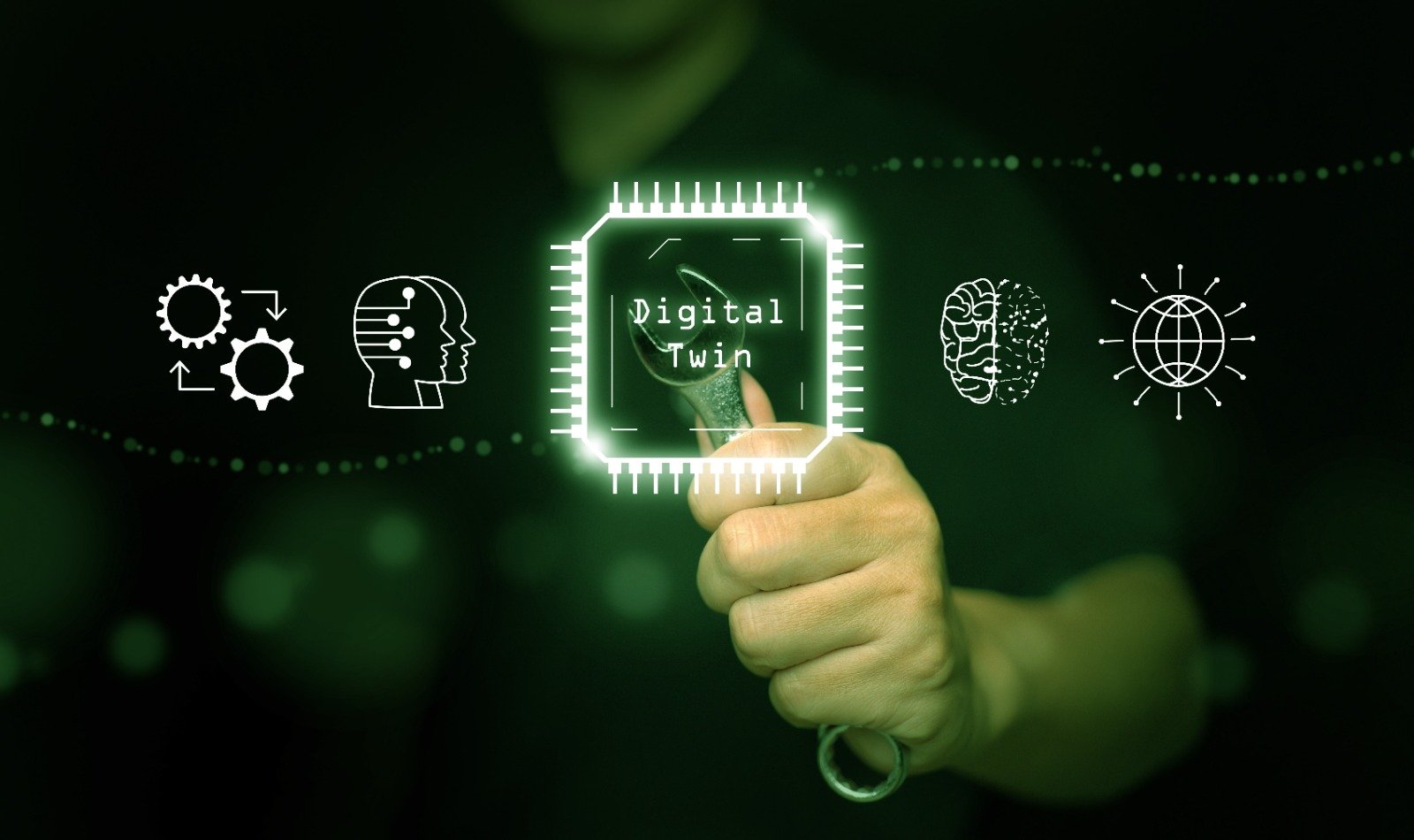
A digital twin is a virtual representation of something real—a piece of equipment, process, system, or even an organization as a whole. It keeps its physical counterpart mirrored in real-time using data, sensors, and analytics.
Imagine an airplane engine where every vibration, heat fluctuation, and performance parameter is duplicated in code. Engineers can simulate how it will react under new situations or if a component fails. That’s a digital twin at work.
But digital twins are no longer confined to machines. Whole factories, supply chains, cities, and businesses now possess digital twins that combine data from IoT sensors, ERP systems, weather feeds, and market data.
When coupled with artificial intelligence, cloud computing, and advanced analytics, digital twins become living laboratories for making decisions, constantly learning, predicting, and informing strategy.
The Role of Simulation in Strategic Decision Science
Simulation is not new. Economists, the military, and planners have employed models for decades to experiment with strategies prior to putting them into practice. What’s new today is the accuracy, magnitude, and interactivity that contemporary computing power and real-time data make possible.
Simulations can experiment with the future before it occurs. Rather than making educated guesses or going by gut feeling, decision-makers can execute infinite “what-if” experiments, simulating anything from supply chain failures to policy reforms or shifts in customer demand.
For instance, a logistics firm might model the effects of an increase in fuel prices by 30 percent or of disruptions to a major shipping hub. A hospital chain might model how patient flows would shift given varying staffing arrangements. A retailer might model how regional demand would respond to new pricing plans.
By testing safely in a virtual environment, leaders transition from intuitive, gut-based decisions to evidence-based foresight.
How Digital Twins and Simulations Cooperate
Whereas simulations enable discrete tests, digital twins enable that process to be continuous and live. They create a feedback loop between digital and physical worlds.
Real-world data feeds the digital simulation. Algorithms simulate behavior, interdependence, and relationships. Decision makers then tweak variables like production rates, market demand, or pricing to test various outcomes.
The outcomes loop back into the model, which readjusts based on fresh information. With time, the system refines itself to be more accurate and prophetic.
This makes strategy not a fixed plan but a dynamic system that adapts as circumstances shift.
Applications Across Industries
Manufacturing and Operations
Firms such as Siemens and GE apply digital twins to model factories, machines, and production lines. They model the way operations react to disruptions so that there can be more informed decisions regarding maintenance schedules, equipment investments, and process redesigns.
Manufacturers can test improvements by simulating different configurations.
Urban Planning and Infrastructure
Other cities, like Singapore and Dubai, have constructed complete digital twins of their city systems. Planners can simulate traffic, water, and energy flows with these models, enhancing urban design, infrastructure investment, and sustainability policy decisions.
Disaster preparedness also relies on simulations, allowing city governments to test emergency responses beforehand.
Healthcare and Hospitals
Hospitals employ digital twins to forecast capacity and optimize patient traffic. Throughout the COVID-19 pandemic, healthcare systems modeled infection transmission, ventilator utilization, and vaccination supply chains to inform national policies and save lives.
Simulation has emerged as a core component of healthcare decision science, translating data into readiness for real life.
Supply Chains and Retail
Multinationals such as Unilever and Amazon have digital twins of their supply chains to model demand oscillations, weather extremes, and geopolitical tensions.
Through constant runs of these models, they are able to forecast bottlenecks, rebalance stock, and build resilience rather than respond to crises.
Finance and Investment
The financial industry employs simulation to stress-test portfolios for various economic situations. Banks simulate lending policy against possible recessions or policy changes.
In investment management, simulation assists companies in comprehending not only anticipated returns but also the shape of potential outcomes, supporting more informed risk-adjusted decisions.
Strategic Advantages: From Uncertainty to Optionality
Risk Management More Effectively
Simulations uncover the ways minor disruptions ripple through systems. Organizations are able to plot weaknesses, develop contingency strategies, and anticipate rather than respond.
Faster Experimentation
Rather than spending months arguing over possibilities, leaders can simulate rapid tests and compare results. This builds a strategic agility culture,faster iteration with less risk.
Aligning Decisions Across Teams
Virtual results are visual and evidence-based, enabling cross-functional teams to create shared knowledge. Strategy conversations become less opinion-based and more evidence-based.
Enhancing Investment Accuracy
By modeling future scenarios, organizations can better allocate resources, determining where returns will persist in several possible futures.
Challenges and Leadership Issues
Although the potential of digital twins and simulations is significant, they also present challenges to be managed by leaders with care.
- Data Quality: Low-quality or skewed data generates inaccurate models. Strong data governance is essential.
- Complexity and Cost: Creating accurate twins demands spending on sensors, analytics, and integration systems.
- Model Validity: Advanced simulations also need to be checked against actual feedback from the real world at regular intervals to avoid false confidence.
- Ethics and Privacy: Simulation of human or social systems uses sensitive information; transparency and consent are vital.
- Adoption and Culture: Simple tools cannot enhance decisions. Leadership needs to integrate simulation-based thinking into planning habits and foster experimentation.
These challenges underscore a fundamental reality: simulations enhance good and poor judgment alike. The solution is not technology alone, but the practice of strategic learning.
Establishing a Simulation-Driven Strategy Practice
Those companies that effectively embed simulation into strategy share some general principles.
They begin with high-impact applications, like supply chain resiliency or sustainability modeling, before expanding to enterprise-scale systems. They create data connectivity between departments so their digital twins remain up-to-date.
They construct multidisciplinary teams consisting of analysts, strategists, and domain specialists who are able to meaningfully interpret model results. And they integrate simulations as part of regular decision cycles, not once a year, but on an ongoing basis.
With time, the company matures from projecting the future to practicing it.
The Future: Strategy as a Living System

As AI, IoT, and real-time analytics keep evolving, digital twins will mature from being operational aids to strategic allies.
Envision a world where your company has a digital twin that tests the effect of new regulations, competitor actions, or climate threats in real time. It guides resource allocation, partnership prospects, and upcoming vulnerabilities, all prior to the transition.
With this model, strategy is dynamic, data-based, and self-adjusting. Plans are not static documents but iterative hypotheses regularly challenged against a living representation of reality.
This is decision science’s future: firms that don’t merely respond to change, but learn and evolve through it continually.
Conclusion: From Guesswork to Guided Foresight
Simulations and digital twins are a paradigm shift in strategic thinking. They enable organizations to test safely, comprehend complexity, and prepare for disruption with more clarity.
Instead of inquiring, “What happens?” leaders may now ask, “What if we experimented with this?” and see the future play out in digital reality before acting in the physical world.
During times of uncertainty, strategy needs to turn into a living discipline, a fluid process of learning, testing, and adjusting.
Digital twins and simulations enable that, turning foresight into a workable rehearsal for tomorrow.
The organizations that embrace these tools will not just survive change; they will stimulate it, shape it, and stay ahead of it.