Advancements in generative AI are steadily redefining how creative work is produced, but some developments signal deeper structural change than others. Google Gemini Project Genie appears to be one such shift. By transforming simple text prompts into fully realized 3D environments, the system challenges long-standing assumptions about the complexity, cost, and expertise required for visual production.
If these capabilities mature as expected, the implications extend beyond creative convenience. They suggest a future in which visualization becomes immediate, experimentation becomes inexpensive, and execution accelerates across industries.
Why Project Genie Matters Now
Traditional 3D creation has historically been restricted to specialists. Designers often invest years mastering modeling software, rendering pipelines, lighting systems, and animation frameworks. Even with skilled teams, production cycles can be slow and resource-intensive.
Project Genie attempts to remove much of that friction by replacing technical workflows with conversational input. Instead of constructing assets manually, users describe what they want, and the system generates an environment accordingly.
The significance lies not only in speed but also in accessibility. When technical barriers fall, participation expands. More contributors can shape ideas earlier in the process, increasing both creative range and organizational agility.
However, it is worth maintaining measured expectations. Early-stage systems often perform impressively in controlled demonstrations but face challenges when applied to production-grade demands such as precision control, stylistic consistency, and integration with existing pipelines.
Execution Advantage for Teams
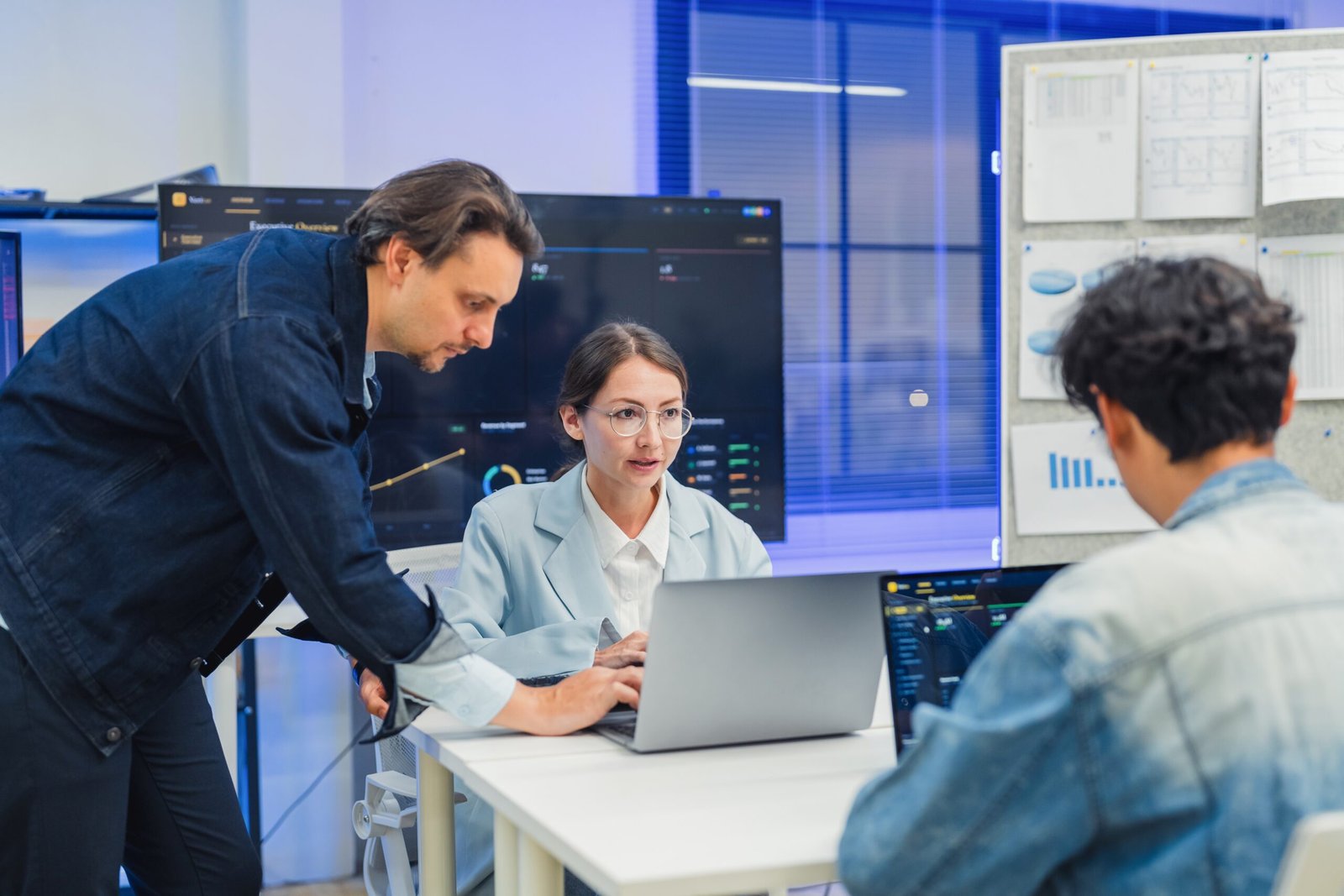
For teams, visualization is often the bottleneck between strategy and action. Concepts discussed in meetings may remain abstract until design resources become available.
A tool capable of generating environments rapidly can compress that gap. Designers, product leaders, and strategists can evaluate multiple variations within a single working session rather than waiting through iterative production cycles.
Reduced dependency chains also streamline communication. Instead of translating ideas through layers of interpretation, teams respond to tangible outputs. Misalignment decreases because everyone is reacting to the same visual reference.
Over time, the ability to iterate quickly compounds into a competitive advantage. Organizations that test more ideas typically discover stronger ones.
Natural Fit Within Fast-Moving Workflows
Speed-driven environments—such as marketing, product development, consulting, and digital education—benefit disproportionately from rapid visualization.
Campaign teams can prototype visual assets before committing budget. Product groups can explore spatial concepts without delaying engineering timelines. Consultants can illustrate recommendations in real time, strengthening client confidence.
Importantly, the tool appears to simplify workflows rather than introduce additional operational layers. When technology reduces steps instead of adding them, adoption tends to accelerate organically.
Still, integration remains a practical question. Enterprises will likely evaluate compatibility with design ecosystems, export formats, editing flexibility, and governance controls before embedding such tools into mission-critical processes.
Removing Long-Standing Creative Roadblocks
Historically, 3D platforms demanded both technical fluency and computational resources. Project Genie signals a move toward automation of modeling, rendering, and revision through natural language interaction.
This transition changes who can contribute creatively. Non-specialists gain the ability to prototype ideas independently, encouraging broader experimentation across departments.
Yet automation introduces new considerations. Creative control, intellectual property boundaries, dataset bias, and output reliability must be carefully managed. As with most generative systems, governance frameworks will determine how safely organizations can scale usage.
Emerging Opportunities Across Industries
Rapid environment generation opens pathways in sectors that rely heavily on visual communication.
Educational institutions could develop immersive learning spaces that enhance comprehension. Marketing teams may produce distinctive campaign visuals without lengthy production timelines. Coaches and trainers might simulate scenarios that improve engagement. Content creators could design recognizable digital settings that strengthen brand identity.
Because experimentation becomes less expensive, organizations can afford to test unconventional concepts. Increased iteration typically correlates with higher innovation velocity.
That said, differentiation may eventually depend less on access to the tool and more on how effectively it is directed. As generative platforms proliferate, strategic thinking—not merely generation capability—will separate high performers from the rest.
Bridging Ideation and Production
One of the most persistent operational gaps inside organizations is the distance between brainstorming and execution. Ideas often remain abstract until resources are allocated and assets are built.
Project Genie narrows that distance by allowing early concepts to become visible almost immediately. Concrete visuals improve decision quality because stakeholders evaluate something real rather than hypothetical.
Shorter feedback loops reduce rework, strengthen alignment, and increase confidence throughout development cycles. Presentations become more persuasive when supported by realistic environments instead of static descriptions.
The Productivity Multiplier Effect
Automation of asset creation has a cascading effect on productivity. Eliminating manual modeling and prolonged rendering reduces both time expenditure and opportunity cost.
Each generated environment becomes a starting point rather than a finished constraint, allowing teams to refine direction without restarting from scratch. Momentum persists because progress is visible.
At scale, these incremental efficiencies accumulate into measurable organizational lift. Teams deliver more output with fewer delays while reallocating human effort toward higher-order thinking.
The Direction of AI-Driven Design

Project Genie reflects a broader transition already underway: design interfaces are moving from technical manipulation toward intention-based interaction. Users increasingly communicate goals rather than execute mechanics.
As this model advances, software mastery may become less critical than conceptual clarity. The ability to articulate vision precisely could emerge as a core professional skill.
Businesses are likely to adopt AI-driven design not simply for novelty but for economic reasons. Lower production costs combined with faster execution create structural incentives that are difficult to ignore.
Strategic Perspective
The deeper importance of Project Genie is not confined to 3D generation alone. It signals a shift toward environments where visualization becomes immediate and creativity scales without proportional increases in effort.
Clarity improves when ideas are made visible early. Decisions accelerate when teams iterate quickly. Innovation expands when experimentation becomes affordable.
Nevertheless, prudent adoption requires balanced evaluation. Capability must be weighed against reliability, governance, and integration readiness.
If these factors evolve alongside the technology, tools like Project Genie could redefine how organizations convert imagination into operational reality—transforming visualization from a specialized function into a routine component of modern work.