Introduction: The Workforce Is Being Rewritten
The future of work isn’t coming someday; it’s happening today. Remote working, AI-driven automation, and fast digital change have forever redefined how organizations function and how individuals construct careers.
HR leaders are at the epicenter of this shift. Their job is no longer to focus on managing headcount or compliance. They are now architects of hard work, tasked with creating future-fit, resilient workforces that can flourish in the midst of technological, economic, and cultural disruption.
To lead, HR will need to adopt strategic foresight, the capacity to look into the future, simulate different scenarios, and make decisions ahead of time. The winners will be companies whose people strategies change as rapidly as the rest of the world around them.
Remote and Hybrid Work: From Experiment to Ecosystem

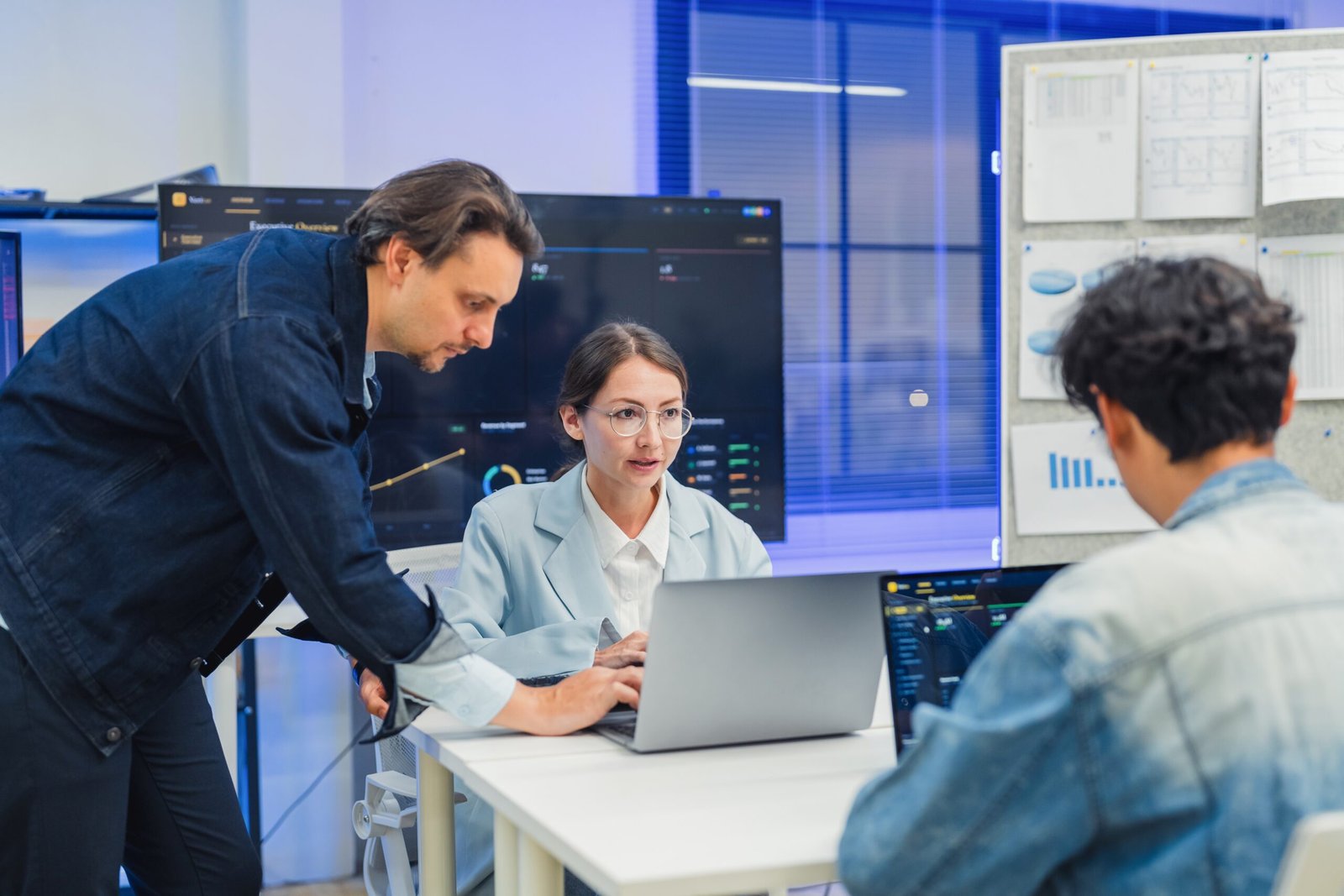
Remote work might have been sparked by the pandemic, but it is now a matter of strategic choice. What was originally a stopgap measure has become an overall rethinking of how and where work is accomplished.
Creating for Flexibility, Not Geography
Remote work is not about geography anymore; it’s about independence, trust, and belonging. HR leaders need to create systems in which flexibility is built into workflows, not bargained as an accommodation.
- Hybrid architecture: Allow workers to transition dynamically between remote and in-office work modes by task type, not role.
- Equity in experience: Invest in digital technologies that provide remote workers with equal visibility and voice in decision-making.
- Outcomes over attendance: Transition performance measurements from hours worked to tangible outcomes and collaborative contribution.
The HR strategic question is no longer if to let people work remotely, but how to make remote work work for culture, connection, and creativity.
1.Redesigning the Workplace
Physical offices need to transform from production facilities to collaboration centers. HR, facilities, and IT teams should together design spaces that facilitate innovation, belonging, and well-being when teams are together in person.
The new workplace is not a place; it’s a network of experiences.
AI and Automation: Redefining Human Roles
Artificial intelligence is transforming every function, from customer support to logistics to HR itself. The reflex response is one of fear, of replacement, redundancy, and loss of control. But automation is not the adversary of human work; mismanagement of it is.
2.Emphasize Augmentation, Not Replacement
AI is great at data-intensive, repetitive, and pattern-based work. Humans are great at empathy, judgment, creativity, and complex communication. The strategic play is to marry the two cleverly.
HR can assist leaders in identifying:
- Tasks to automate: Recurring tasks (payroll, scheduling, resume screening) that allow workers to be freed up for more valuable work.
- Roles to upgrade: New jobs at the interface of technology and humanity, AI trainers, data ethicists, and human-machine coordinators.
Most successful companies will be those that see AI as a partner, rather than a competitor.
3.Prepare for Workforce Recomposition
Each technological jump shifts the skill set an organization requires. As AI reshapes functions, HR needs to constantly map which skills are decreasing, which are emerging, and which are portable.
Foresight techniques, such as skills heatmaps, scenario modeling, and job simulations, can be used to forecast talent shortfalls before they materialize.
Agility is the key: workforce planning has to move from annual review to constant reskilling cycles.
Upskilling and Human Capability Building
The World Economic Forum forecasts that more than a billion people will require reskilling because of automation and changing jobs by the year 2030. However, most organizations do not view learning as a continuous capability but still approach it as a one-off activity.
4.Make Learning Continuous and Contextual
In the future, learning has to become part of work itself. HR has to lead “learning in the flow of work,” microlearning modules, digital coaching, and on-demand knowledge platforms built into everyday work.
- From training to transformation: Transition from short courses to adaptive, career-spanning learning ecosystems.
- Personalized pathways: Utilize AI to suggest learning content based on each employee’s skill trajectory.
- Measure learning ROI: Monitor not only completion rates but behavioral shift and performance impact.
Upskilling is not a benefit; it’s employability currency.
5.Human Skills First
While machines are doing repetitive work, human skills, creativity, collaboration, emotional intelligence, and critical thinking will be competitive differentiators.
The foresight challenge for HR is to rebalance the budget for development: as much in empathy and systems thinking as in technical skills.
The organizations that will succeed will be ones that get future-proofing people, which equates to future-proofing purpose.
Redefining Leadership and Culture
The work of the future also requires a new type of leadership, one that excels in uncertainty, empathy, and trial and error.
6.Lead with Empathy and Clarity
In hybrid, rapidly changing workplaces, workers yearn for connection and significance. HR needs to prepare leaders to:
- Speak openly about change and automation.
- Lead by trust, not surveillance.
- Demonstrate curiosity, inclusion, and lifelong learning.
Foresight-driven HR makes leaders not only decision-makers but also sense-makers, enabling teams to understand change and make sense of ambiguity together.
7.Create a Culture of Adaptability
Culture needs to shift from stability to adaptability. Experimentation should be encouraged, learning from failure celebrated, and cross-skilling or self-reinvention rewarded.
HR can institutionalize adaptability as a key performance measure, because in a world where change is the new constant, the skill of adaptability is the highest skill.
The Strategic Foresight Agenda for HR

To get ready for the next decade, HR leaders must move now on four fronts:
- Work Design: Revitalize work as a dynamic portfolio of tasks, marrying human imagination with machine precision.
- Talent Intelligence: Construct data-driven models that constantly scan for changing skills, talent pools, and automation effects.
- Learning Ecosystems: Establish alliances with edtech platforms, universities, and internal academies to support lifelong learning.
- Purpose and Ethics: Align automation and remote work decisions with organizational values and the well-being of employees.
Through the integration of foresight into HR strategy, organizations can move from responding to workforce changes to designing the future of work.
Conclusion: HR as the Architect of the Future
The future of work is not a prediction; it’s a design assignment. Remote work is redesigning space. AI is redesigning jobs. Upskilling is redesigning value.
In all of this, HR is the lead strategist of flexibility, the department that makes certain that human ability grows at technology’s pace.
The critical question HR can pose is not, “What do we need today?” but rather, “What will enable us to survive and thrive tomorrow?”
Because ultimately, the future of work will not be owned by those who forecast it but by those who get their people ready to build it.