Introduction: The Two Sides of Market Foresight
All successful businesses confront a basic strategic question:
Should we forecast what customers will want next, or should we create what they want?
In the era of big data and predictive analytics, firms are highly proficient at predicting demand. Algorithms can identify trends, examine patterns of search, and predict consumption patterns with unnervingly high accuracy. But history teaches us that most revolutionary innovations, such as the iPhone, Netflix, and Tesla, did not come from predicting demand. They came from creating demand.
Knowing when to respond to current demand and when to drive the market to new wants is the art of contemporary strategic foresight. The challenge is less analytical than philosophical. It involves making a choice between whether to track the future or shape it.
Predicting Demand: The Reactive Discipline
What It Means
Demand forecasting is the science of analyzing data to predict what customers will purchase, when, and in what amount. It is an art of observation and optimization, interpreting market signals and optimizing operations to respond to them at an optimal level.
The Predictive Tools
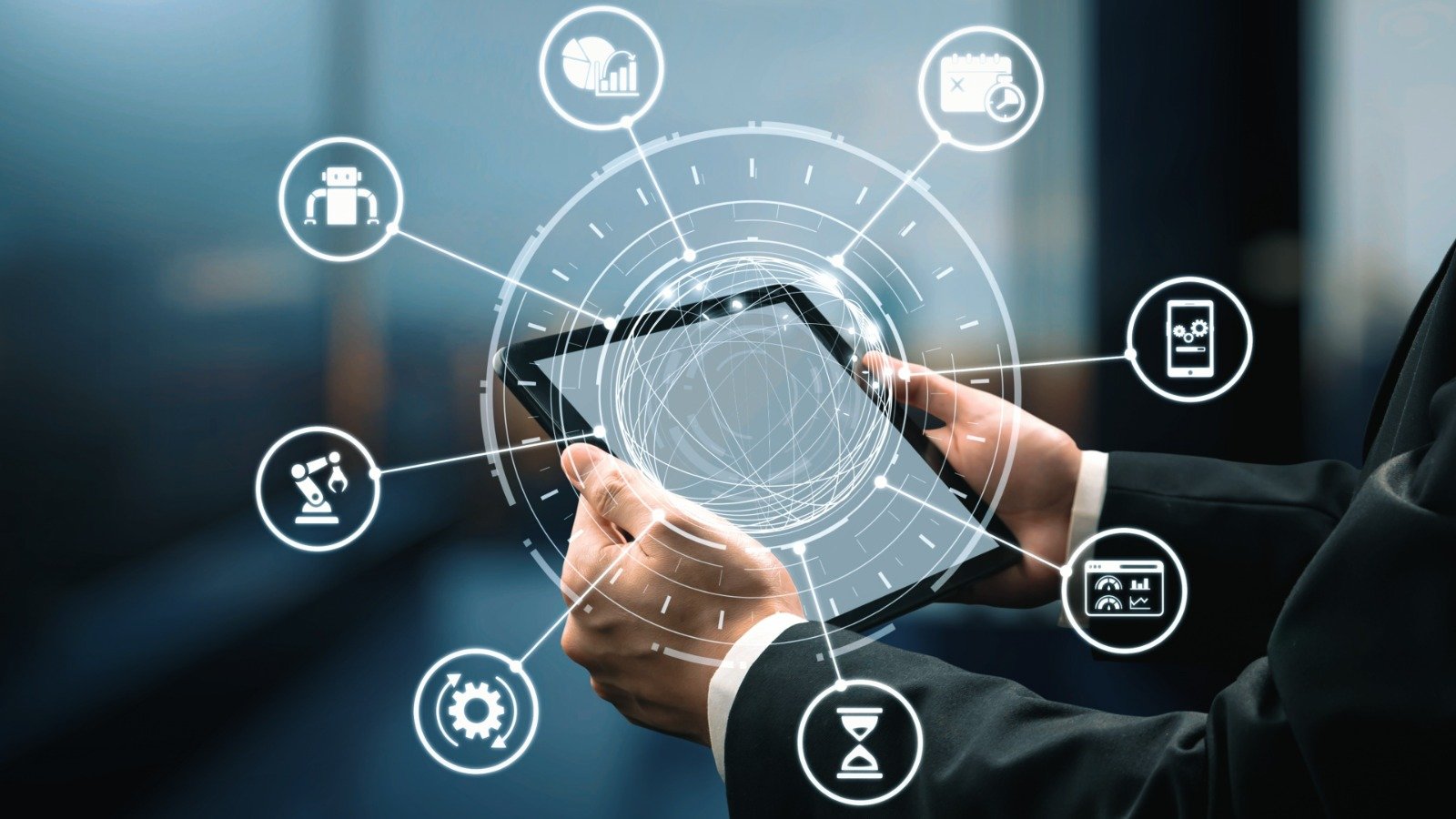
Breakthroughs in AI, data analytics, and machine learning have made demand forecasting an exacting science. Tools can now process:
- Transaction history and seasonality patterns
- Real-time social media sentiment
- Macroeconomic indicators
- Localized behavior with geospatial data
Predictive demand models are applied by retailers to control inventory. They are applied by streaming services such as Netflix to forecast viewing patterns. They are applied by consumer goods manufacturers to adapt production horizons.
When Prediction Works Best
Predictive methods are most effective in stable, mature markets where customer tastes are relatively well-known and product classes are clearly established. Examples are:
- FMCG and retail, where cycles of purchase are repetitive and data-rich
- Logistics and supply chain planning, where demand forecasting cuts costs
- Subscription-based services, where user retention can be modeled in churn
In these contexts, less emphasis is placed on revolutionary innovation and more on precision, speed, and responsiveness.
The Limitation of Prediction
Predictive models were founded in the past. They excel at projecting current trends, but do not do well in forecasting discontinuities, points at which behavior drastically changes.
No model forecasted the explosion of short-form video viewing, the cultural shift to sustainability, or the mainstream instant uptake of generative AI. Forecasting techniques reflect the past; they have difficulty envisioning futures not yet real.
That is, prediction makes you competitive, but not necessarily different.
Shaping Demand: The Creative Discipline
What It Means
Demand shaping is building new wants, behaviors, or segments that do not currently exist. It’s not about responding to what your customers want; it’s about changing what they want.
Steve Jobs once quipped, “People don’t know what they want until you show it to them.” It’s the demand-shaping philosophy: vision first, validation second.
How It Works
Demand shaping combines foresight, design thinking, and cultural intuition. It involves envisioning latent needs, needs customers can’t yet define, and designing products or experiences that embody them.
Successful demand shaping typically requires three ingredients:
- Human insight: Comprehension of emotional or social drivers behind surface needs.
- Visionary framing: Creating a new value proposition or category that redefines expectations.
- Ecosystem orchestration: Creating supporting technologies, communities, or stories that facilitate ease of adoption.
Examples of Demand Shaping
- Apple generated demand for smartphones as lifestyle devices.
- Airbnb transformed housing into a travel experience.
- Tesla did not simply sell electric vehicles; it made sustainability desirable.
- Starbucks did not forecast the consumption of coffee; it created a whole “third place” culture.
All these brands saw beyond the statistics of what customers were consuming. They dreamed of what customers could cherish next.
The Risks of Shaping Demand
Market leading is thrilling but dangerous. For each iPhone, there are several hundred failed innovations that came too early. Shaping demand takes guts, money, and time. It could even involve educating consumers, constructing infrastructure, or redefining industry logic.
Still, in a world of saturated categories, playing it safe is often riskier. The companies that survive disruptions are usually those that created the next wave, not those that optimized the current one.
When to React, When to Lead
Balancing predictive and creative strategies is not an either/or choice. Smart organizations learn to switch between reaction and creation depending on context.
React When:
1.Markets Are Mature
When categories are settled and competition is on the basis of cost or efficiency, prediction generates better returns.
2.Consumer Preferences Are Clear
If consumers have ingrained habits or settled expectations, molding demand can be a waste.
3.Operational Efficiency Is the Key Differentiator
In logistics, retail, or utilities, precision and dependability triumph over novelty.
4.Short-Term Volatility Is High
During times of uncertainty, responding rapidly to changes is preferable to spending on futures that are speculative.
Example: Walmart leverages predictive analytics to predict demand for essentials at thousands of stores. In such markets, innovation is about speed, scale, and accuracy, not new categories.
Lead When:
1.Markets Are Saturated
When competitors all offer the same products, differentiation must involve redefining value itself.
2.Consumer Behavior Is Changing
Moments of cultural or technological transition create opportunities for new desires.
3.Data Is Backward-Looking
When current data can’t account for emerging signals, imagination is the guide.
4.You Have the Ecosystem Power to Shape Trends
Strong community, distribution, or storytelling brands can better lead markets.
Example: Dyson transitioned from vacuum cleaners to electric hair tools and air purifiers. The changes were not reactions to overt customer demand but aggressive forays into unoccupied ground.
The Strategic Balance: Predictive + Creative Intelligence
In practice, the most enduring companies blend both mindsets. They apply data to feel where the world is trending and vision to move it in that direction.
1.Employ Prediction to De-Risk Creation
Have data point out emergent signals, keywords, activities, early adopters, and where shaping may pay off.
2.Utilize Creation to Elongate Prediction
Roll out pilot experiments to produce new insights into untested wants. This fuels the subsequent wave of predictive learning.
3.Embrace Dual Operating Modes
- Exploit mode: Maximize core business with predictive efficiency.
- Explore mode: Design future growth with visionary innovation.
4.Empower Leadership Ambidexterity
Great leaders recognize when to heed the numbers and when to disregard them. They view data as a compass and not a cage.
Case in Point: Amazon is a prime example of this twinning. Its retail and logistics wings are adept at predictive efficiency, but ventures such as AWS and Alexa demonstrate visionary demand driving. This blend enables Amazon to both preempt customers’ next click and design the markets of the future.
Conclusion: The Art of Foresight is Knowing When to Follow and When to Lead
Creation and prediction are complementary halves of strategic foresight. Prediction enables organizations to remain responsive and efficient; creation enables them to become transformative and iconic.
Balance is the secret:
- Forecast when customers speak loudest.
- Influence when customers are quiet but agitated.
- Respond when volatility is extreme.
- Move ahead when stagnation prevails.
In rapidly moving industries, waiting for clean data is too often a matter of waiting too long. In stable ones, going too far ahead is going it alone.
Real foresight is a matter of understanding what game you are playing. The future is not to be forecast or conjured up by oneself. It is to be co-created, half by data, half by imagination.