Artificial intelligence is steadily transforming software development, and the introduction of AI agents inside Apple’s Xcode marks a meaningful evolution rather than a routine upgrade. By embedding automation directly into the development environment, these agents aim to eliminate some of the slowest and most repetitive aspects of building applications.
The result is not merely faster coding—it is a shift toward structured, execution-driven workflows where planning, testing, and refinement increasingly occur with minimal manual intervention.
Addressing the Modern Demand for Speed and Accuracy
Software teams today operate under intense delivery expectations. Products must evolve rapidly while maintaining stability, security, and performance. Traditional workflows often struggle under this pressure because engineers spend a substantial portion of their time debugging, restructuring code, and resolving integration issues.
Xcode AI agents attempt to reduce this operational drag by automating iterative processes. Instead of approaching refinement through fragmented work sessions, developers can rely on a system that applies consistent logic across each cycle.
When repetitive corrections move into automation, professionals regain time for higher-value responsibilities such as architectural planning, user experience decisions, and long-term product strategy. Output becomes easier to maintain because structural consistency is enforced automatically rather than retrofitted later.
However, speed must remain balanced with oversight. Automated workflows deliver the most value when paired with rigorous testing and review practices.
An Agentic Workflow Designed for Complex Projects
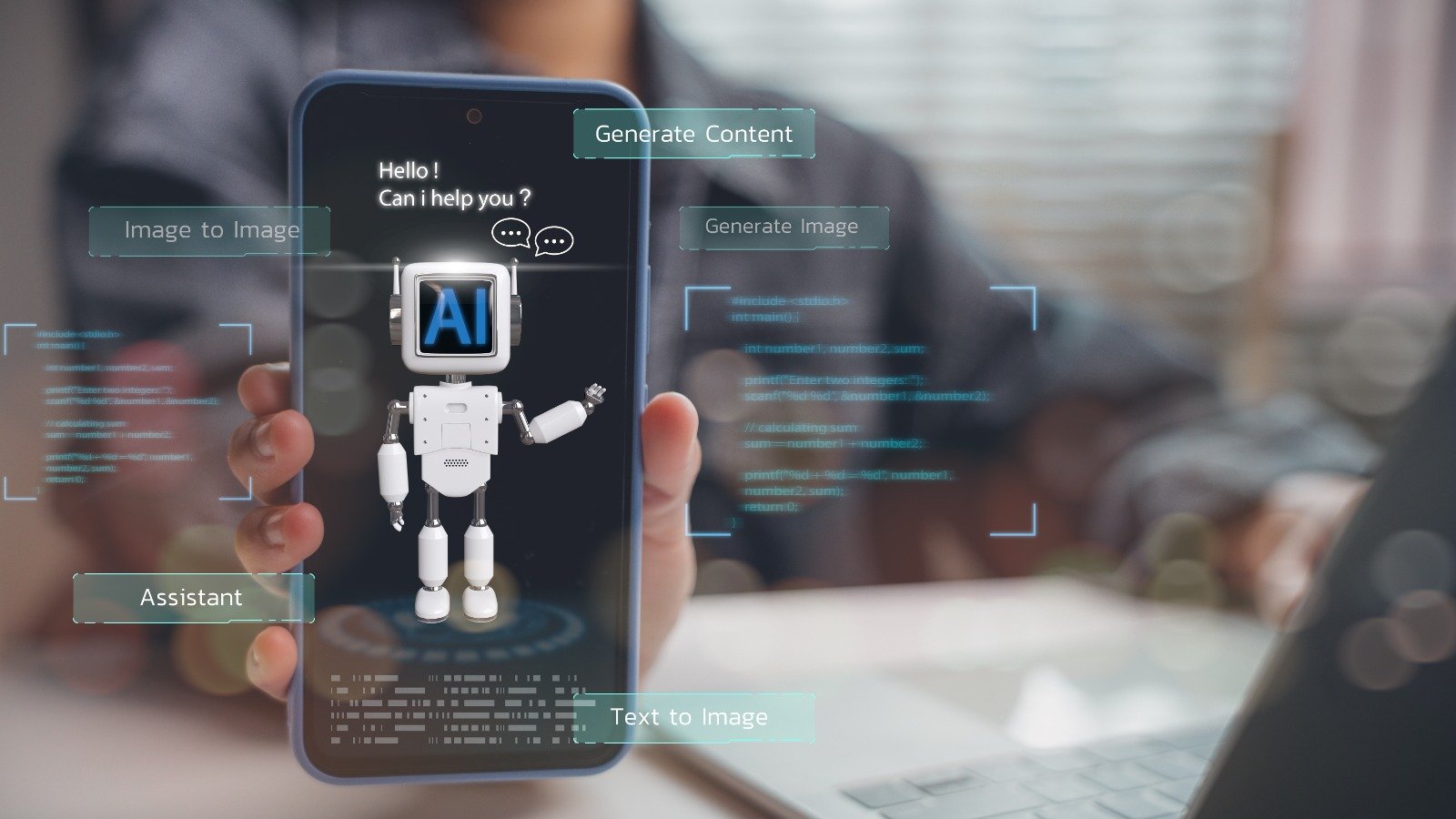
A defining feature of Xcode AI agents is their agentic workflow model. Rather than generating isolated snippets of code, the system interprets a high-level instruction and converts it into a sequence of coordinated actions.
Typically, this includes:
- Reviewing the entire project to identify appropriate integration points
- Creating new files while updating existing components
- Running build processes to verify stability
- Detecting and correcting compile-time errors
- Adjusting logic based on test outcomes
- Updating interface elements when necessary
- Iterating until the feature operates as intended
This structured progression mirrors the disciplined approach used by experienced developers. The difference lies in execution speed and consistency.
That said, large codebases often contain nuanced design decisions that automation cannot fully contextualize. Human supervision remains essential to ensure that newly generated features align with long-term architectural goals.
Accelerating Learning and Prototyping
One of the clearest advantages of integrated AI agents is the ability to compress early development timelines. Functional examples can be produced quickly, allowing teams to validate ideas before committing significant resources.
For less experienced developers, this capability also supports faster learning. Studying complete implementations offers insight into architecture, dependencies, and workflow patterns that might otherwise take months to internalize.
Prototyping benefits even more. When ideas move from concept to working model in minutes rather than hours, experimentation becomes less risky. Teams can evaluate multiple approaches, discard weaker ones early, and refine promising directions with greater confidence.
Still, organizations should encourage foundational understanding alongside automation. Over-reliance on generated code without conceptual clarity may introduce hidden vulnerabilities over time.
Built on an Open, Future-Ready Protocol
Xcode AI agents operate on a model context protocol designed to support multiple AI systems. This architectural choice reduces dependence on a single provider and creates flexibility as newer models emerge.
The advantages are strategic:
- Teams can select models suited to specific tasks
- Development environments remain adaptable
- Integration barriers decrease as the ecosystem evolves
Open infrastructure also promotes innovation by allowing organizations to incorporate emerging capabilities without restructuring their workflows. Nevertheless, compatibility management should remain a priority to prevent fragmentation across toolchains.
Strengthening Structure While Reducing Technical Debt
Technical debt rarely appears overnight. It accumulates through minor inconsistencies, partial refactors, and outdated documentation. Over time, these issues slow development and increase maintenance costs.
AI agents can help mitigate this risk by continuously reinforcing structural discipline. They identify repeated patterns, surface architectural gaps, and apply refactoring practices before problems spread throughout the codebase.
Equally important is automated documentation. When documentation evolves alongside the code, teams avoid the costly process of reconstructing system knowledge months later.
Transparency remains critical. Automated changes should always be observable through version control and review pipelines to prevent unintended consequences.
Enabling Larger Ideas Through Predictable Execution
Complexity often limits innovation. When execution becomes unpredictable, teams hesitate to pursue ambitious features due to the operational burden involved.
AI agents reduce this friction by stabilizing the development cycle. With repetitive processes handled automatically, engineers can concentrate on creative direction and product differentiation rather than mechanical corrections.
This predictability encourages experimentation. Bold ideas become more practical when the cost of iteration declines, and momentum increases because fewer obstacles interrupt progress.
Over time, organizations capable of directing automation effectively may gain a measurable competitive advantage.
A Strategic Shift Rather Than a Replacement
It is important to frame Xcode AI agents accurately: they are not a substitute for developers. Instead, they redefine how engineering effort is distributed.
Execution becomes increasingly automated. Strategy, system design, governance, and critical judgment remain firmly human responsibilities.
Teams that benefit most will be those that treat AI as infrastructure—an operational layer that enhances clarity and consistency—rather than a shortcut that bypasses engineering discipline.
Final Perspective
Apple’s integration of AI agents into Xcode signals a broader transition toward structured development environments where automation supports every stage of the lifecycle. Repetitive cycles move into the background, workflows gain stability, and execution accelerates without necessarily increasing workload.
The long-term impact is likely to compound:
- Faster feature delivery
- Cleaner architecture
- Reduced debugging overhead
- Stronger documentation practices
- Greater capacity for innovation
Yet the defining factor will not be the technology alone—it will be how responsibly teams adopt it. Automation performs best under thoughtful governance, continuous testing, and informed oversight.
Software development is entering a phase where directing intelligent systems becomes as important as writing code itself. Organizations that adapt early, while maintaining technical rigor, will be positioned to operate with a level of speed and clarity that traditional workflows may struggle to match.