

OpenClaw and GLM-5: Scaling Automation Without Scaling Risk
Automation tools often promise efficiency, but only a small subset meaningfully improves operational throughput without introducing fragility. The pairing of OpenClaw with GLM-5 suggests movement toward a more structured automation architecture—one that blends execution with deeper reasoning. The strategic implication is not merely faster workflows. It is the possibility of delegating increasingly complex cognitive sequences […]
OpenClaw Multi-Agent Systems and the Maturation of Local Automation Architectures
Local automation is evolving from isolated assistants toward coordinated systems capable of distributing cognitive and operational workload. The OpenClaw Multi-Agent update appears to reflect this architectural shift, emphasizing agent collaboration, memory continuity, and execution stability. The significance is less about raw speed and more about structural maturity. Multi-agent environments suggest a transition from reactive tooling […]
NotebookLM Mobile and the Shift Toward Pocket-Sized Production Systems

Mobile computing is approaching a threshold where capture and production occur within the same device. The NotebookLM Mobile upgrade appears aligned with this transition, positioning the smartphone not merely as a recording tool but as a lightweight content engine. The strategic appeal is obvious: compress the distance between idea and artifact. Yet the durability of […]
VisionClaw AI and the Rise of Perceptual Automation

Artificial intelligence is gradually moving beyond text-based interaction toward systems capable of interpreting the physical world in real time. VisionClaw AI appears positioned within this transition, emphasizing environmental awareness, multimodal input, and execution-driven assistance. The concept is compelling: an assistant that observes, listens, and acts without requiring constant manual instruction. Yet as with any emerging […]
OpenClaw Local AI and the Strategic Shift Toward On-Device Automation
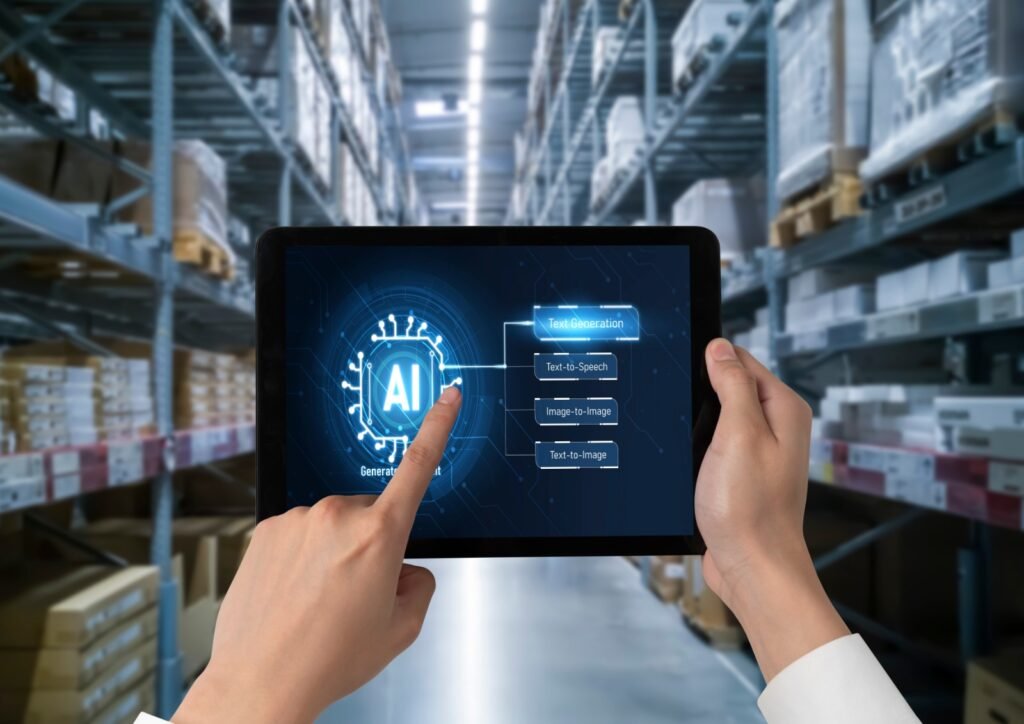
Automation is entering a phase where control, latency, and data governance matter as much as raw capability. OpenClaw Local AI appears aligned with this shift by prioritizing on-device execution over cloud dependence. The appeal is straightforward: faster response times, reduced external risk, and greater operational autonomy. Yet these benefits materialize only when infrastructure, hardware capacity, […]
OpenClaw Automation and the Move Toward Structured Execution
Automation tools often promise efficiency but deliver fragmentation when poorly integrated. OpenClaw Automation appears oriented toward a different objective: creating predictable workflows by reducing operational noise rather than adding another layer of complexity. Its potential value is not merely task automation. It lies in establishing structure—an attribute that tends to separate scalable systems from fragile […]
MiniCPM-o 4.5 and the Shift Toward Practical Local AI

The evolution of artificial intelligence is increasingly defined by efficiency rather than scale alone. MiniCPM-o 4.5 represents a notable step in that direction—a multimodal model designed to deliver voice, vision, and reasoning capabilities within a compact architecture suitable for local deployment. Its significance lies less in novelty and more in operational practicality. Models that run […]
Claude 4.6 AI Is the Most Human-Like Reasoning Upgrade Yet

Advances in large language models are increasingly measured not just by speed, but by the quality of reasoning they exhibit. Claude 4.6 is positioned as a step toward more structured, deliberate cognition—an evolution that emphasizes coherence, stability, and interpretive depth. Whether this qualifies as “human-like” reasoning is debatable. However, the model appears designed to reduce […]
The Impact of Google Gemini Project Genie Is Bigger Than Most People Realize
Creative technology tends to evolve in waves. First, tools become more powerful. Then, they become more accessible. Google Gemini Project Genie appears positioned at the second inflection point. By converting natural language prompts into complete 3D environments, the system reduces one of the most persistent barriers in digital production: technical overhead. If this capability performs […]
Claude Opus 4.6 AI Agents Show Why Autonomous Systems Are Now Practical, Not Theory

Autonomous AI systems have long been discussed as a future milestone. Claude Opus 4.6 AI Agents suggest that the shift from theory to practice may already be underway. In a recent demonstration, a coordinated group of agents reportedly built a Rust-based C compiler capable of compiling the Linux kernel—without internet access and without step-by-step human […]