Automation platforms have matured rapidly, but a persistent barrier has remained: operational friction. Installation complexity, unstable APIs, prompt limitations, and rate restrictions often prevent AI systems from functioning as reliable production tools. Integrations that aim to reduce these constraints therefore deserve analytical attention—not because every update is transformative, but because stability is a prerequisite for meaningful automation.
The OpenClaw–Minimax integration represents an attempt to streamline AI-driven workflows by simplifying setup, improving responsiveness, and reducing technical interruptions. While early impressions suggest practical improvements, it is important to examine both the advantages and the limitations before treating such systems as foundational infrastructure.
Why Stability Matters More Than Feature Expansion
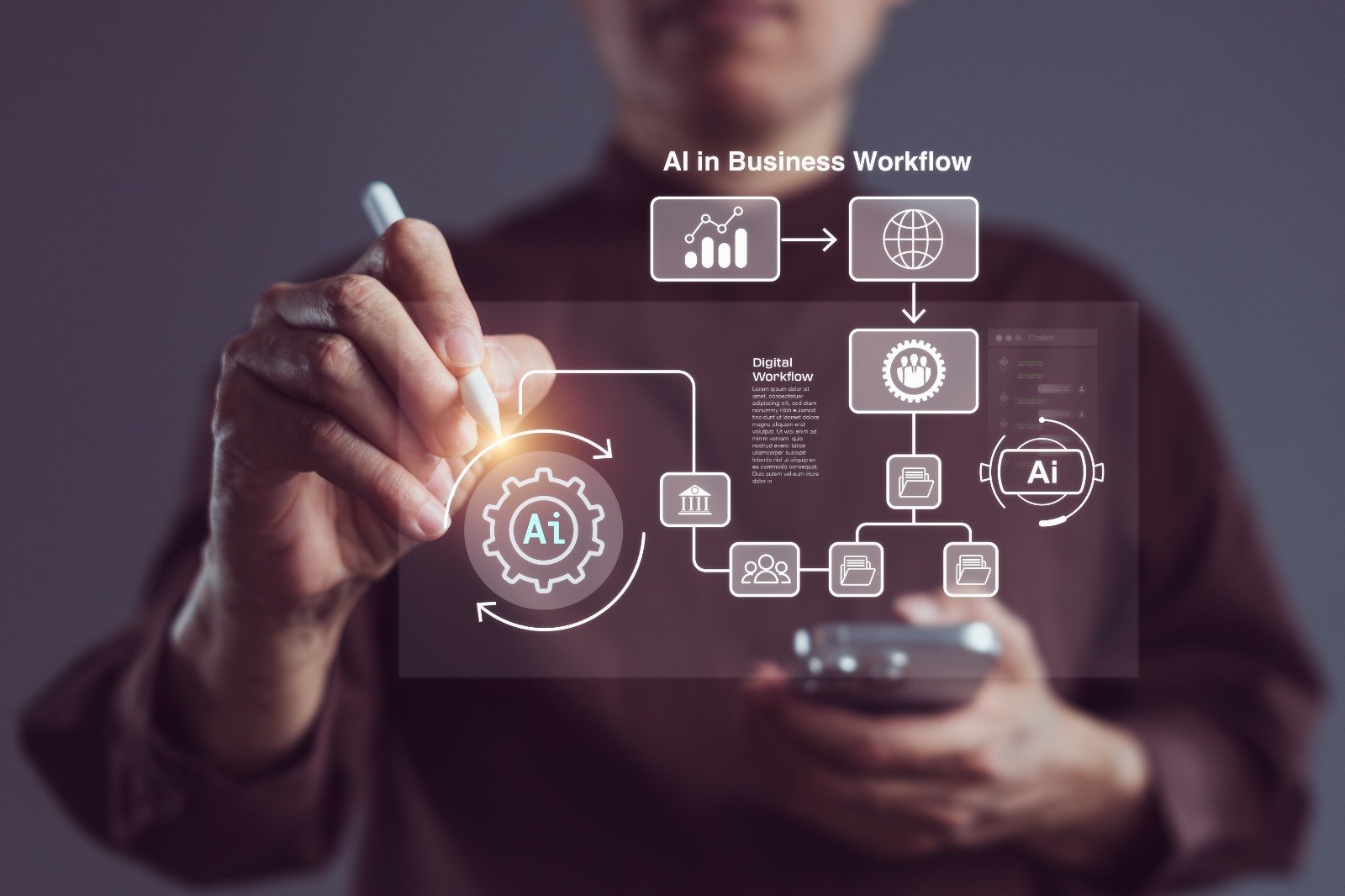
Many AI platforms focus on expanding capabilities—larger models, multimodal inputs, or new endpoints. Yet organizations often derive greater value from reliability than novelty.
An integration that allows users to authenticate once, establish a working connection, and move directly into production tasks addresses a common operational pain point. Frequent authentication failures, broken calls, and rate-limit interruptions typically erode user confidence and slow adoption.
When a system minimizes these disruptions, the psychological effect can be as important as the technical one. Teams shift attention from troubleshooting toward output.
However, perceived smoothness during early usage does not automatically guarantee long-term resilience. Sustained performance under heavy workloads remains the more relevant test.
Workflow Experience: Reducing Mechanical Friction
Reports surrounding the integration emphasize a more fluid workflow environment:
- Long prompts process without interruption.
- Landing page generation returns quickly.
- Imported workflows load reliably.
- Agent operations maintain dashboard stability.
These characteristics suggest improved orchestration between components rather than a dramatic leap in model capability.
This distinction is critical. Productivity gains often arise not from smarter AI, but from fewer operational obstacles.
When systems “get out of the way,” momentum increases.
Yet organizations should validate performance across diverse tasks before assuming universal reliability.
The Gateway Layer and Its Strategic Role
Running the integration through a dedicated gateway appears to enhance contextual handling and reduce platform limitations commonly encountered in messaging-based interfaces.
Potential benefits include:
- Acceptance of longer inputs
- Cleaner context retention
- More stable retries
- Reduced dependence on third-party messaging constraints
For complex workflows—such as multi-step automation or large document generation—these improvements can materially affect throughput.
More broadly, gateway architecture reflects a professionalization trend in AI deployment: shifting from lightweight interfaces toward controlled local environments.
Still, gateways introduce their own responsibilities, including configuration management and security oversight.
Infrastructure simplification rarely eliminates operational accountability.
Speed as a Hidden Multiplier
Performance is frequently underestimated in automation discussions. Faster response times do more than save minutes; they reshape behavior.
When systems respond quickly enough to integrate into daily workflows, users are more likely to experiment, iterate, and expand use cases. Over time, these incremental gains compound into measurable productivity improvements.
However, speed should be evaluated alongside consistency. Rapid but unpredictable responses can undermine trust just as effectively as slow ones.
The relevant question is not whether tasks complete quickly, but whether they do so reliably.
Where the Integration Shows Vulnerability
No early-stage integration is without faults, and identifying them is essential for responsible adoption.
One reported instability involves the speech endpoint within the Minimax 2.8 environment. Failures at this layer can disrupt the broader connection and require re-authentication—a reminder that complex AI stacks are only as stable as their weakest component.
Avoiding unstable endpoints is a pragmatic short-term solution, but it also signals that the system is still evolving.
Leaders should interpret such limitations as indicators of developmental maturity rather than isolated technical glitches.
Security Considerations Should Not Be Secondary
Automation environments capable of executing commands require careful protection. Exposed gateways, particularly on public virtual servers, create a potential attack surface.
If unauthorized users discover an open endpoint, they may gain the ability to trigger actions within the session.
Best practices typically include:
- Running environments locally when feasible
- Restricting network exposure
- Storing credentials securely
- Using sandboxing tools to isolate execution
Security is not an advanced concern—it is foundational. Efficiency gains lose relevance if infrastructure is vulnerable.
Accessibility and Hardware Flexibility
The reported ability to operate the integration on compact hardware suggests improved computational efficiency. Lower hardware thresholds can expand accessibility for smaller teams and independent operators.
Nevertheless, hardware compatibility should be distinguished from performance sufficiency. Systems that function on lightweight devices may still encounter bottlenecks under sustained workloads.
Pilot testing remains advisable before operational reliance.
Interpreting Claims of Workflow Replacement
Assertions that a single integration might replace an entire workflow should be approached cautiously. Enterprise processes typically involve governance layers, compliance checks, collaborative review cycles, and cross-platform dependencies.
Automation can streamline segments of this chain, but full replacement is rare without organizational redesign.
The more realistic interpretation is that such integrations can compress operational friction—potentially allowing teams to reallocate time toward higher-value tasks.
Transformation tends to occur incrementally rather than through sudden substitution.

A Broader Signal: The Shift Toward Usable Automation
The deeper significance of integrations like this lies in what they represent structurally. AI is moving from experimental tooling toward environments designed for sustained operational use.
Several patterns are emerging:
- Reduced tolerance for unstable APIs
- Greater emphasis on orchestration
- Movement toward locally controlled infrastructure
- Increasing expectation of production-grade reliability
These trends suggest that the competitive frontier is shifting from raw model capability toward deployment quality.
Execution environments are becoming strategic assets.
Critical Evaluation Before Adoption
Organizations considering similar integrations should evaluate several dimensions:
- Reliability under realistic workload conditions
- Security architecture
- Vendor dependency risks
- Maintenance requirements
- Integration with existing systems
Enthusiasm should follow evidence, not precede it.
Measured experimentation typically produces stronger long-term outcomes than rapid, tool-driven transitions.
Conclusion: Friction Reduction as a Strategic Advantage
The OpenClaw–Minimax integration illustrates an important evolution in AI ecosystems: usability is beginning to rival capability as the defining metric of value.
When automation becomes stable enough to embed into daily workflows, its impact extends beyond efficiency. It reshapes how teams allocate attention, how quickly they iterate, and how confidently they scale operations.
Yet prudence remains essential. Early integrations often demonstrate promise before achieving full operational maturity.
The organizations most likely to benefit are those that observe carefully, test deliberately, and integrate selectively—treating emerging tools not as wholesale replacements, but as components within a thoughtfully designed automation strategy.