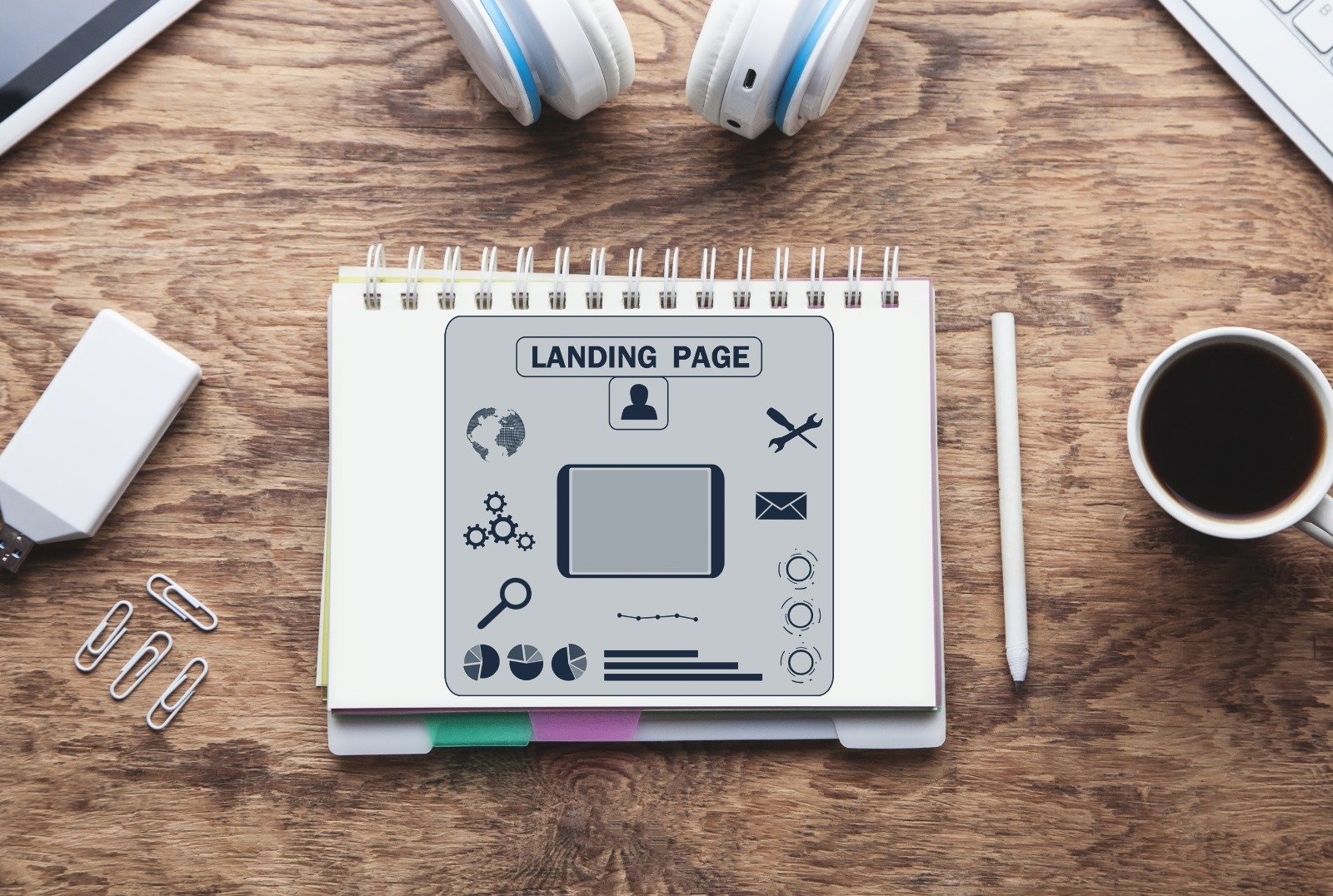
Landing pages play a decisive role in how businesses communicate value, attract leads, and convert prospects into customers. Despite their importance, many landing pages are built using guesswork rather than structured insight. Teams often jump directly into writing copy without establishing clear positioning, validated messaging, or evidence-based differentiation. The NotebookLM Landing Page Workflow introduces a structured system that transforms landing page creation from a creative gamble into a repeatable, research-driven process.
This workflow shifts the focus from writing faster to thinking more clearly, resulting in stronger positioning, higher credibility, and improved conversion performance.
Moving Beyond Guesswork to Research-Driven Messaging

One of the most common mistakes in landing page creation is starting with copywriting instead of research. Without a solid strategic foundation, even well-written copy can lack persuasive strength because it is not grounded in real customer insights or market behavior.
The NotebookLM Landing Page Workflow solves this problem by requiring structured research before any writing begins. Instead of generating messaging from vague prompts, professionals upload relevant source materials such as customer testimonials, competitor pages, case studies, industry reports, and internal documentation.
NotebookLM analyzes these sources and identifies meaningful patterns. These patterns include recurring customer pain points, common objections, decision triggers, and measurable outcomes. Because these insights originate from verified sources, the messaging becomes grounded in reality rather than assumptions.
This research-first approach ensures that the landing page reflects authentic market dynamics, making the messaging more relevant and persuasive.
Structuring Insights to Strengthen Positioning
Research alone does not guarantee clarity. Without proper organization, insights remain fragmented and difficult to translate into effective messaging. The NotebookLM Landing Page Workflow includes a structured organization phase that transforms scattered information into a coherent narrative.
Insights are grouped into logical categories aligned with the buyer journey. These categories typically include problem awareness, solution clarity, benefits, proof, and differentiation. This structured approach ensures that each section of the landing page builds logically on the previous one.
Clear organization reduces cognitive friction for readers. Visitors can quickly understand the problem, recognize the solution, and see the value without confusion. This improves engagement and increases the likelihood of conversion.
Structured positioning also strengthens authority. Claims supported by documented evidence carry more credibility than generic marketing statements.
Translating Research Into Clear Value Communication
Decision-makers often scan landing pages rather than reading every word. This makes clarity and structure essential. The NotebookLM Landing Page Workflow includes converting insights into structured value frameworks, such as feature-benefit tables.
These tables clearly connect product capabilities with measurable outcomes and ideal use cases. Instead of vague promises, each feature is tied to a specific business impact.
For example, instead of stating “improves productivity,” the page can explain how automation reduces manual workload, saves hours per week, and improves operational efficiency. This specificity improves trust and helps prospects evaluate relevance quickly.
Structured value presentation also improves readability and comprehension, which enhances both user experience and conversion performance.
Improving Drafting Efficiency With Contextual Grounding
Once research and organization are complete, drafting becomes significantly more efficient. NotebookLM provides structured context that enables AI tools to generate aligned, high-quality copy.
Because the AI has access to organized insights, it produces messaging that reflects strategic positioning rather than generic language. This reduces the need for extensive rewriting and correction.
Drafting becomes a refinement process rather than a reconstruction effort. Teams can focus on improving clarity, tone, and user experience instead of fixing structural weaknesses.
This accelerates production timelines while maintaining higher quality standards.
Strengthening Authority and Building Trust
Trust is one of the most critical factors influencing conversion. Landing pages built without research often rely on generalized claims that fail to establish credibility.
The NotebookLM Landing Page Workflow strengthens trust by grounding messaging in documented evidence. Customer outcomes, validated patterns, and measurable improvements reinforce claims.
When prospects recognize their own challenges reflected accurately, they perceive the solution as more credible. Specific examples and realistic outcomes increase confidence in the offer.
This credibility reduces skepticism and encourages deeper engagement.
Creating Repeatable Systems for Scalable Growth
Sustainable growth requires repeatable systems. Ad hoc landing page creation leads to inconsistent messaging and inefficient workflows. The NotebookLM Landing Page Workflow provides a repeatable framework that can be applied across multiple products, services, and campaigns.
The process remains consistent:
- Upload relevant research sources
- Extract patterns and insights
- Organize insights into structured messaging
- Translate insights into value frameworks
- Draft and refine copy using contextual grounding
This repeatable structure improves efficiency and ensures consistent quality across projects.
Over time, teams develop institutional expertise and messaging clarity that compounds across campaigns.
Supporting SEO Through Depth and Structure
Search engine optimization depends heavily on content quality, clarity, and structure. Pages built without depth often struggle to rank competitively.
The NotebookLM Landing Page Workflow naturally improves SEO performance by incorporating research-driven depth. Structured formatting enhances readability and improves content hierarchy.
Clear sections, logical organization, and meaningful insights strengthen authority signals. Search engines favor content that demonstrates expertise, relevance, and user value.
This alignment improves both search visibility and user engagement.
Enabling Strategic Thinking Instead of Reactive Writing

The most important advantage of this workflow is its impact on strategic thinking. Instead of relying on intuition or generic templates, teams make decisions based on evidence and structured analysis.
This improves positioning clarity, messaging precision, and overall effectiveness. Landing pages become strategic assets rather than isolated creative tasks.
Professionals who adopt structured workflows gain a long-term advantage because their messaging becomes increasingly refined and aligned with market reality.
Conclusion: Turning Landing Pages Into Strategic Infrastructure
The NotebookLM Landing Page Workflow represents a shift from prompt-based content generation to system-based messaging development. By prioritizing research, organization, and structured communication, it creates landing pages that are clearer, more credible, and more effective.
This workflow improves conversion performance, enhances SEO outcomes, and enables scalable content production. More importantly, it transforms landing page creation into a disciplined, repeatable process that supports long-term business growth.
As competition increases and attention spans decrease, clarity and credibility become essential. Structured workflows like this provide the foundation needed to communicate value effectively and convert prospects consistently.