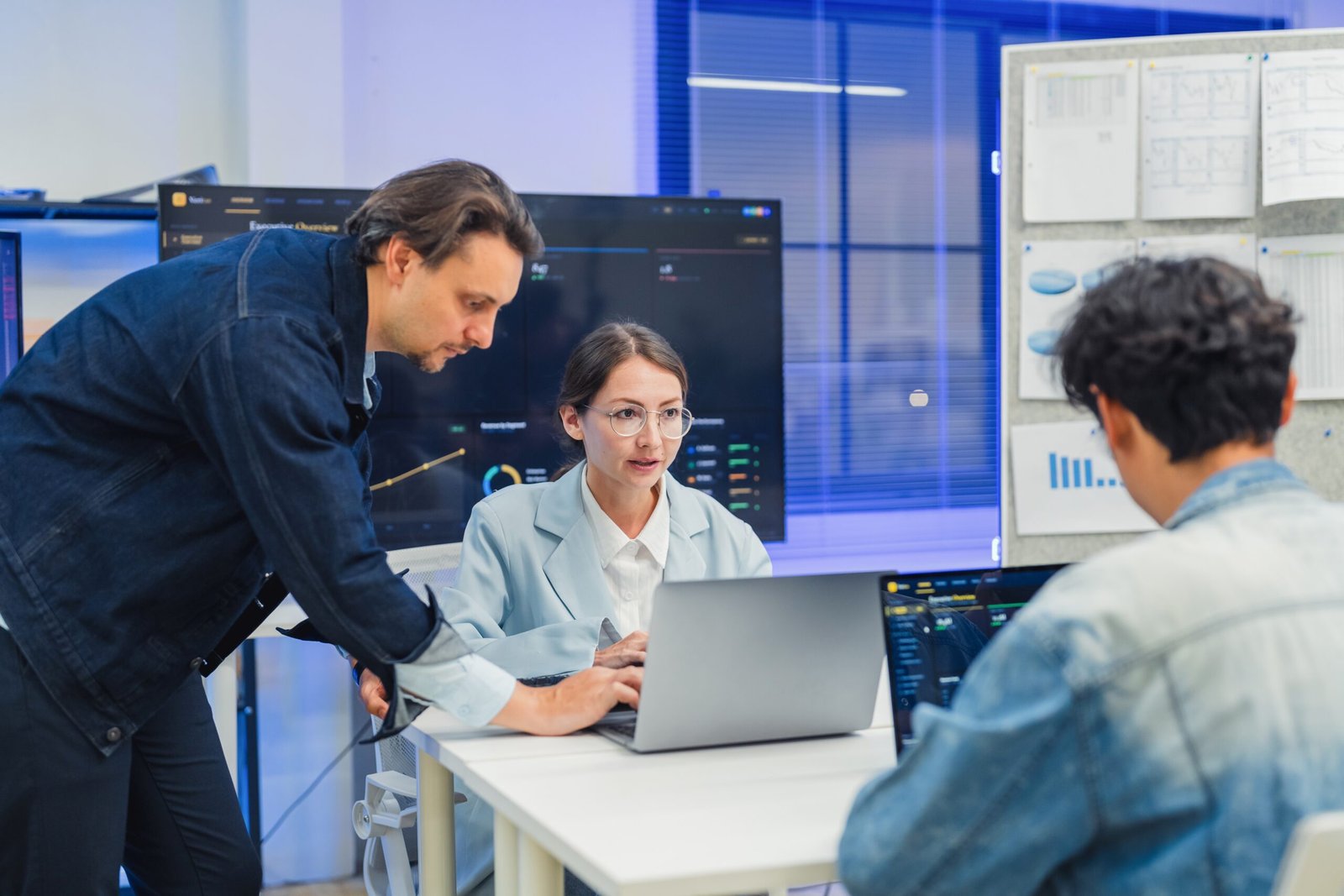
The pace of digital production has accelerated dramatically in recent years. Organizations are expected to create more content, launch campaigns faster, and maintain consistent brand experiences across channels — all without significantly expanding their workforce. This growing demand has forced businesses to rethink how creative and operational workflows are structured.
Google Whisk and Minimax Agent Automation represent a notable development in this evolving landscape. Together, they introduce a production model that reduces manual effort, shortens execution cycles, and supports scalable output without overwhelming internal teams. By combining automated visual generation with intelligent planning and execution, this pairing enables organizations to move from idea to deployment with greater speed and predictability.
This article examines how these technologies reshape production workflows, enhance collaboration, improve testing capabilities, and help businesses build sustainable content systems.
Transforming Production Workflows

Traditional production pipelines often suffer from fragmentation. Designers wait for briefs, writers wait for direction, marketers wait for assets, and campaigns stall while dependencies accumulate. Over time, these delays compound into missed opportunities.
Google Whisk and Minimax Agent Automation introduce a structured operating rhythm where repetitive execution shifts from humans to automated systems. Visual creation becomes faster because complex prompting is no longer required, while messaging and planning benefit from intelligent analysis and drafting support.
As a result, workflows begin to stabilize. Projects advance without constant intervention, and teams experience fewer bottlenecks. Instead of reacting to operational friction, professionals can focus on refining strategy and improving outcomes.
Consistency becomes the defining advantage. When production runs smoothly, momentum is no longer an exception — it becomes the default state of the organization.
Accelerating Visual Output
Visual production has historically been one of the most time-intensive aspects of campaign development. Crafting prompts, reviewing iterations, requesting revisions, and aligning designs with brand standards can consume significant resources.
Google Whisk simplifies this process through a reference-based creation model. Users provide a subject, define a scene, and establish stylistic direction. The system then blends these inputs into cohesive visuals that align with the intended aesthetic.
This approach offers several operational benefits:
- Reduced reliance on complex prompt engineering
- Faster concept testing
- Greater stylistic consistency
- Expanded creative access for non-designers
By lowering the technical barrier to design, organizations increase output without proportionally increasing workload. Teams can evaluate more creative directions in less time, strengthening overall campaign quality.
Intelligent Structure, Strategy, and Execution
While visual production is critical, effective campaigns depend equally on structured messaging and clear strategic direction. This is where Minimax Agent Automation plays a central role.
The system analyzes objectives, identifies necessary steps, and supports execution with organized drafts and planning frameworks. Instead of beginning with a blank page, teams receive structured starting points that accelerate progress.
- Planning becomes more deliberate.
Drafting becomes more efficient.
Execution becomes more predictable.
This redistribution of effort allows teams to dedicate more attention to evaluation rather than mechanical creation. Small departments, in particular, benefit from this capability, as it enables them to operate with a level of output typically associated with larger organizations.
Building a High-Speed Content Engine
When combined, Google Whisk and Minimax Agent Automation function as a cohesive production engine capable of supporting large-scale content initiatives. Ideation, drafting, designing, and publishing can occur in parallel rather than sequentially.
Organizations no longer need to delay launches due to missing visuals or incomplete messaging. Automation carries much of the operational weight, allowing creative professionals to concentrate on direction, quality, and differentiation.
This shift is especially valuable in competitive markets where timing influences performance. Faster deployment enables quicker learning cycles, and quicker learning often translates into stronger results.
Over time, production evolves from a reactive process into a dependable system.
Enhancing Landing Page Optimization
Landing pages play a pivotal role in conversion-focused marketing, yet optimizing them typically involves multiple rounds of analysis and redesign.
Minimax Agent Automation assists by evaluating structural clarity, messaging strength, and benefit articulation. Teams can request revised sections and receive improved versions aligned with campaign goals.
Once messaging is refined, Google Whisk supports the visual layer by generating brand-aligned imagery within seconds. Multiple hero variations can be reviewed rapidly, enabling teams to ship updates sooner and conduct more experiments.
The combined effect is a faster optimization cycle — one that supports continuous improvement rather than sporadic redesign efforts.
Strengthening Campaign Development
Successful campaigns rely on alignment between visuals, messaging, and timing. Disconnected elements often lead to diluted impact.
With Minimax building campaign frameworks and generating messaging variations, and Google Whisk delivering complementary visuals, organizations achieve greater coherence across assets. Each component reinforces the others, resulting in a unified brand presence.
Shorter development timelines also reduce operational strain. Fewer manual steps mean fewer delays, allowing marketing teams to maintain agility even during high-demand periods.
Improving Collaboration Across Teams
Automation can significantly enhance collaboration by allowing specialists to focus on their areas of expertise.
- Designers spend less time on repetitive revisions.
Writers face fewer structural obstacles.
Marketers gain clearer frameworks for execution.
When execution tasks are streamlined, communication improves naturally. Teams operate with greater transparency because workflows are easier to understand and track.
The outcome is not merely faster production, but stronger coordination throughout the project lifecycle.
Turning Testing Into a Competitive Advantage

Organizations that test frequently tend to outperform those that rely on static strategies. However, testing has traditionally been constrained by the time required to create variations.
Google Whisk enables rapid generation of visual alternatives, while Minimax produces multiple messaging approaches. This dramatically lowers the cost — both in time and resources — associated with experimentation.
As testing becomes more accessible, decision-making shifts toward data rather than intuition. Optimization cycles accelerate, and organizations gain insights sooner.
In competitive environments, this ability to iterate quickly can become a defining differentiator.
Expanding Creative Capacity
Creative professionals often spend disproportionate time on execution rather than conceptual work. Automating foundational tasks changes this balance.
With visual creation and structural drafting supported by intelligent systems, teams reclaim energy for ideation, storytelling, and refinement. Campaign quality improves because creative talent is applied where it delivers the greatest value.
Rather than replacing creativity, automation amplifies it by removing the processes that typically constrain it.
Supporting Scalable Business Growth
Growth introduces complexity. Without reliable production systems, increased demand can overwhelm teams and destabilize workflows.
Google Whisk and Minimax Agent Automation provide a foundation for scalable operations by making output more predictable. Smaller teams can handle broader responsibilities without compromising consistency.
Campaigns progress from concept to execution more efficiently, enabling businesses to respond confidently to expanding opportunities.
Predictability, in this context, becomes a strategic asset.
Reducing Operational Stress
Repetitive production cycles often contribute to burnout, particularly when deadlines converge. Automation alleviates this pressure by stabilizing the content pipeline.
- Teams avoid last-minute scrambles.
Schedules become more manageable.
Execution feels controlled rather than chaotic.
A healthier production environment supports sustained performance — an essential factor for long-term organizational resilience.
Reinforcing Brand Consistency
Maintaining a cohesive brand requires uniform visuals, messaging, and structural clarity across all touchpoints.
Google Whisk supports stylistic alignment by applying consistent reference inputs, while Minimax helps ensure that messaging reflects the intended voice and tone. Together, they reduce the risk of fragmented communication.
A strong, recognizable identity emerges when each asset contributes to a unified narrative.
Enabling Long-Term Strategic Focus
Perhaps the most significant advantage of predictable automation is the mental space it creates for leadership and strategic planning.
When execution becomes dependable, professionals can invest more time in analyzing performance, refining offers, and shaping long-term direction. Operational clarity supports better decisions.
Scaling begins to feel deliberate rather than overwhelming.
Final Perspective
Google Whisk and Minimax Agent Automation illustrate a broader shift toward intelligent production ecosystems. Instead of relying solely on human effort, organizations are building workflows that sustain momentum through structured automation.
Visual speed, messaging clarity, and execution stability combine to form a system capable of supporting continuous growth. Teams become more capable without proportionally increasing headcount, and creative energy is redirected toward innovation rather than repetition.
As production expectations continue to rise, businesses that adopt intelligent workflow models will likely operate with greater agility and resilience. The future of content development will not depend solely on how hard teams work, but on how effectively their systems enable them to move from concept to completion.