Artificial intelligence is rapidly evolving from a conversational assistant into a practical operational system capable of executing complex business processes. One of the most significant developments driving this shift is the emergence of Claude Sonnet 4.6 agent workflows. By combining structured reasoning, long-context understanding, and multi-step execution capabilities, these workflows enable organizations to automate repetitive tasks reliably and at scale.
For businesses seeking to reduce operational friction, improve productivity, and streamline decision-making, Claude Sonnet 4.6 represents a major step forward. Rather than generating isolated responses, the system plans, reasons, and executes tasks in a structured sequence—transforming AI from a support tool into an operational engine.
From Conversational AI to Operational Infrastructure

Automation only delivers value when it operates reliably without constant human correction. Earlier AI systems often struggled with multi-step tasks, losing context midway or producing inconsistent results. Claude Sonnet 4.6 addresses these limitations through stronger long-form reasoning and improved execution stability.
The model maintains logical coherence across extended workflows, ensuring that plans remain consistent even as tasks grow complex. Instructions persist throughout the process, decisions follow predictable sequences, and outputs arrive in structured, usable formats.
This shift fundamentally changes how organizations interact with AI. Instead of using AI to generate individual responses, businesses can deploy structured workflows that handle planning, execution, and refinement automatically. The result is a system capable of supporting real operational work rather than isolated interactions.
The Execution Layer: Claude Sonnet 4.6 and OpenClaw Integration
A key advancement in Claude Sonnet 4.6 workflows is the integration of execution environments such as OpenClaw. This combination allows AI-driven reasoning to translate directly into real-world actions.
Claude Sonnet 4.6 functions as the planning and decision-making layer. It analyzes objectives, determines the required steps, and produces structured execution plans. OpenClaw acts as the operational layer, carrying out those instructions by interacting with applications, navigating interfaces, completing forms, and performing screen-based actions.
This collaboration bridges the gap between thinking and doing. Tasks that once required manual interaction—such as updating systems, managing workflows, or processing operational data—can now be handled automatically.
Earlier desktop automation tools often failed due to unstable navigation or inconsistent execution. However, improvements in sequential decision-making and screenshot interpretation have made modern agent workflows more reliable. Businesses can now automate complex operational processes without constant monitoring.
Another important advantage is cost efficiency. Claude Sonnet 4.6 enables long-running workflows with lower operational overhead, making continuous automation accessible to organizations of different sizes.
The Knowledge Layer: Integrating Structured Context With NotebookLM
Effective automation depends not only on execution but also on access to accurate information. This is where structured knowledge systems such as NotebookLM play a critical role.
NotebookLM functions as a centralized knowledge repository, storing documents, notes, transcripts, and organizational information. Claude Sonnet 4.6 can reference this material before executing tasks, ensuring that workflows rely on accurate and consistent data.
This integration eliminates fragmented decision-making. Instead of relying on partial information, the model operates with a unified understanding of organizational context, including standard operating procedures, research materials, and brand guidelines.
The result is a complete automation pipeline:
- NotebookLM provides structured knowledge.
- Claude Sonnet 4.6 performs reasoning and planning.
- OpenClaw executes actions.
Together, these components create a system that moves seamlessly from context to decision to execution.
Accelerating Research and Strategic Analysis
Claude Sonnet 4.6 agent workflows significantly improve research processes by automating information gathering, analysis, and synthesis.
The system can collect data from multiple sources, compare findings, and identify patterns without manual intervention. Insights are presented in structured formats, enabling faster decision-making and reducing the time spent on repetitive analysis.
When connected to structured knowledge systems, research workflows become even more effective. The model can reference existing organizational information while evaluating new inputs, producing more accurate and context-aware conclusions.
For organizations that rely on research-driven decision-making—such as consulting firms, marketing teams, and product developers—this capability offers measurable efficiency gains.
Transforming Content Production Into a Repeatable System
Content creation is another area where agent workflows deliver substantial value. Claude Sonnet 4.6 can automate early-stage planning, drafting, and refinement across various content formats.
Outlines follow logical structures, messaging remains consistent, and drafts maintain alignment with organizational goals. When connected to knowledge repositories, the system can incorporate brand guidelines and reference materials automatically.
This turns content production into a repeatable process rather than a manual effort. Teams can generate structured drafts for emails, reports, landing pages, and communication materials with minimal intervention, reducing production time while maintaining quality.
Improving Operational Efficiency Across Organizations
Administrative tasks often consume a significant portion of organizational resources. Claude Sonnet 4.6 workflows address this challenge by automating routine operational processes.
Meeting discussions can be converted into action plans automatically. Follow-up tasks can be generated without manual tracking. Reports and summaries can be produced regularly without additional effort. Documentation can update itself based on connected knowledge sources.
By reducing repetitive administrative work, organizations free employees to focus on strategic and creative activities. Teams gain more uninterrupted work time, managers receive clearer insights, and overall operations become more consistent.
Supporting Engineering and Technical Development
Technical teams also benefit from Claude Sonnet 4.6’s structured reasoning capabilities. The model supports architecture planning, debugging, and application scaffolding with greater accuracy than earlier systems.
Multi-step logic remains stable, development workflows become more predictable, and repetitive setup tasks can be automated through integrated execution environments. Developers spend less time managing routine processes and more time focusing on system design and innovation.
This enhances productivity across the entire development lifecycle.
A Scalable Automation Framework for Modern Businesses
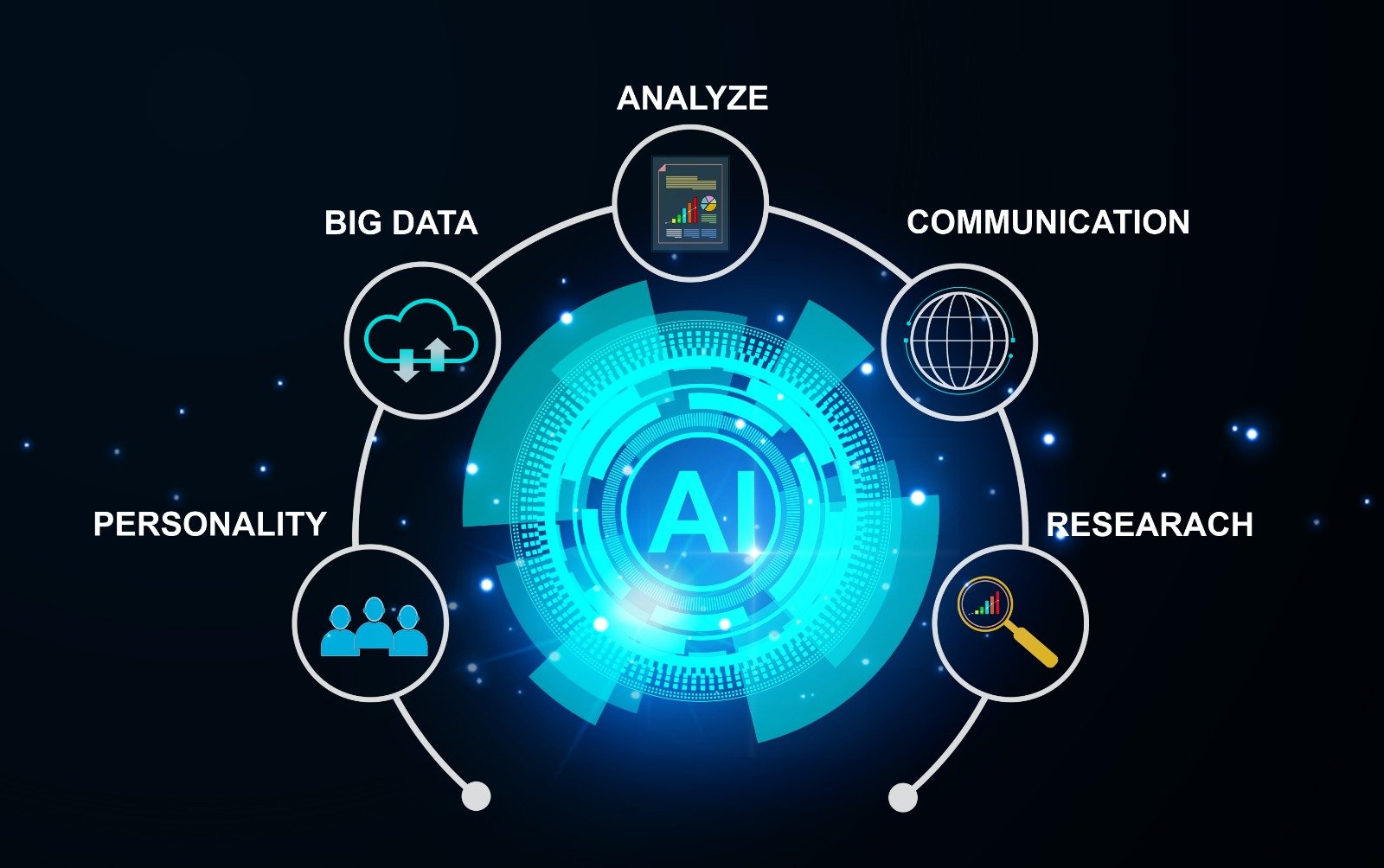
The broader impact of Claude Sonnet 4.6 lies in its ability to function as a scalable automation layer across multiple business functions. Research pipelines, content systems, operational processes, and technical workflows can all be automated within a unified framework.
By combining structured reasoning, centralized knowledge, and real-world execution, organizations gain a system that performs meaningful work without continuous supervision. AI shifts from an experimental tool to a core component of operational infrastructure.
Conclusion
Claude Sonnet 4.6 agent workflows represent a significant advancement in AI-driven automation. Through improved reasoning, reliable execution, and integration with knowledge and action layers, the system enables businesses to eliminate manual work at scale.
By transforming planning, execution, and information management into a unified process, these workflows reduce operational friction, enhance productivity, and support more consistent outcomes. As organizations continue to adopt automation technologies, systems like Claude Sonnet 4.6 will play a central role in shaping the future of efficient, scalable work.